
Science
Corrective Sleep Therapy
What The Research Shows
The position you sleep in and the surfaces supporting your body, can influence spinal alignment, pressure distribution, waking symptoms, and body mechanics.
Research continues to explore the relationship between sleep posture and spinal health, but several findings support the importance of creating a properly supported sleeping position.
1. Sleep Position Is Associated With Spinal Alignment and Low Back Pain
A 2025 systematic review examined the relationship between sleeping posture and low back pain. The authors found that supine sleeping supported spinal alignment and was associated with a lower prevalence of low back pain, while prone sleeping was associated with increased lumbar strain. Properly supported side sleeping may also be beneficial.
Citation:
Saini Y, Rai A, Sen S. Relationship Between Sleep Posture and Low Back Pain: A Systematic Review. Musculoskeletal Care. 2025;23(2). doi:10.1002/msc.70114.
2. Sleep Posture Is Related to Waking Spinal Symptoms
Researchers objectively monitored participants' sleeping positions over two nights and compared people with and without waking spinal symptoms. Those with cervical symptoms spent more time in provocative sleep postures, changed positions more frequently, and reported poorer sleep quality than participants without symptoms.
Citation:
Cary D, Jacques A, Briffa K. Examining relationships between sleep posture, waking spinal symptoms and quality of sleep: A cross-sectional study. PLoS ONE. 2021;16(11). doi:10.1371/journal.pone.0260582.
3. Pillow Height Changes Cervical Spine Biomechanics
Research examining different pillow heights in the supine position found measurable changes in cranio-cervical pressure and cervical spine alignment as pillow height changed. The researchers concluded that these biomechanical effects are height-specific, reinforcing that how the head and neck are supported matters.
Citation:
Ren S, Wong DW-C, Yang H, Zhou Y, Lin J, Zhang M. Effect of pillow height on the biomechanics of the head-neck complex: investigation of the cranio-cervical pressure and cervical spine alignment. PeerJ. 2016;4. doi:10.7717/peerj.2397.
4. Pillow Design Can Affect Neck Pain and Waking Symptoms
A 2021 systematic review and meta-analysis examined 35 studies involving pillow design, neck pain, waking symptoms, disability, sleep quality, and spinal alignment. The authors found that certain pillow designs were associated with reductions in neck pain, waking pain, and neck disability, and noted that cervical alignment can be influenced by pillow shape and height.
Citation:
Pang J, Tsang SMH, Fu ACL. The effects of pillow designs on neck pain, waking symptoms, neck disability, sleep quality and spinal alignment in adults: A systematic review and meta-analysis. Clinical Biomechanics. 2021;85:105353. doi:10.1016/j.clinbiomech.2021.105353.
5. Your Sleep Surface Can Measurably Change Spinal Alignment
Using MRI, researchers measured the lumbar spine of healthy adults lying supine on a mattress and on a rigid surface. They found small but statistically significant changes in lumbar spinal angles, demonstrating that the surface supporting the body can influence spinal geometry even while lying down.
Citation:
Vitale JA, Borghi S, Bassani T, et al. Effect of a mattress on lumbar spine alignment in supine position in healthy subjects: an MRI study. European Radiology Experimental. 2023;7:47. doi:10.1186/s41747-023-00361-w.
The Takeaway
The research supports an important principle behind Corrective Sleep Therapy™:
Your sleeping position matters. Your pillow matters. Your sleep surface matters.
When you consider how many hours you spend in bed over the course of your lifetime, sleep represents an important opportunity to create a better mechanical environment for your spine.
That's the philosophy behind the Neck Nest: don't simply support your head, create a sleeping environment designed to support better alignment.
Video
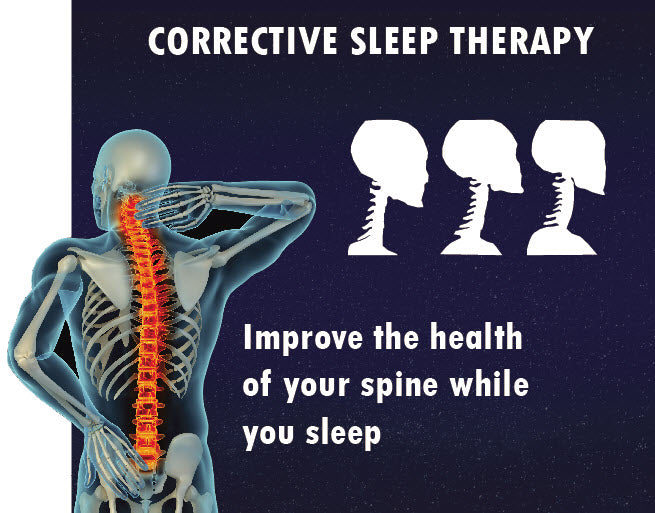
Improve Your Alignment While You Sleep
After reviewing more than 1,000 patient X-rays, I began noticing a recurring pattern: loss of the natural cervical curve in the neck.
It made me start looking beyond what my patients were doing during the day—and at the position they were spending hours in every night.
Modern life already places enormous stress on our posture. Phones, computers, driving, and prolonged sitting repeatedly position the head forward. The last thing we want to do is reinforce that same posture while we sleep.
That's the idea behind Corrective Sleep Therapy™.
Instead of simply supporting the head with another pillow, we use sleep position to create a better structural environment for the neck and spine.
By sleeping on your back with the neck properly supported in a more neutral or extended position, your body weight can be distributed across a greater surface area while reducing the need for the spine to twist and compensate.
Your daytime posture is constantly being challenged. Your nighttime posture is an opportunity to do something about it.
That's why the Neck Nest isn't designed simply as a pillow for your head. It's designed as a posture alignment support for your neck—helping you use the hours you already spend sleeping to support better alignment.
Don't just sleep. Use your sleep to realign.
Video

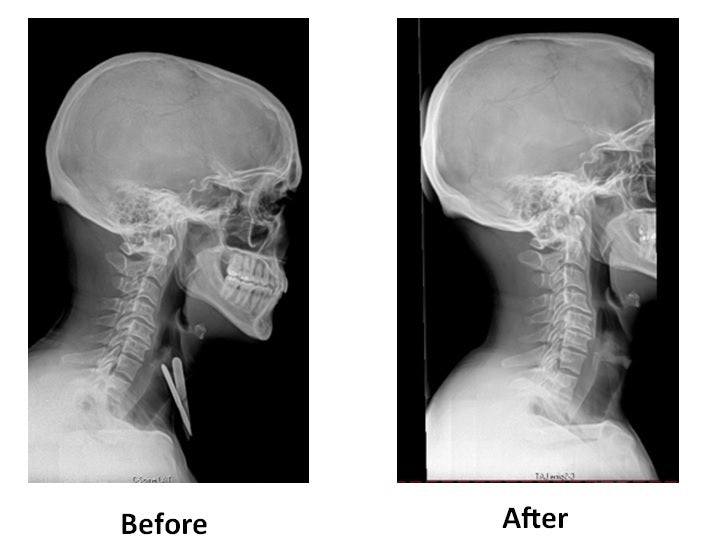
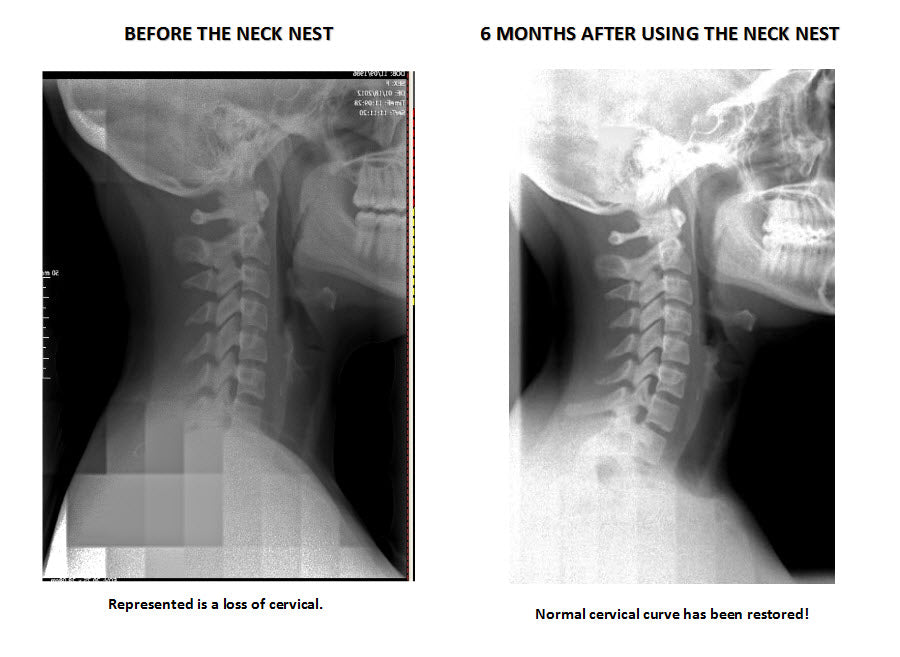
Your Sleep Environment Shapes Your Body Mechanics
Your body responds to the position you place it in—and sleep is no exception.
Every night, your mattress, pillow, and sleeping position determine how your body weight is distributed and how your spine is positioned for hours at a time.
When you sleep on your side or stomach, more of your body weight is concentrated through smaller areas such as the shoulder and hip. Your body may respond to pressure or discomfort by changing positions throughout the night.
Back sleeping creates a different mechanical environment.
Lying on your back distributes your body weight across a larger surface area and allows the spine to rest in a more symmetrical position. But there is one important piece most people miss:
Your pillow matters.
Most traditional pillows are designed to support and elevate the head. But if the head is pushed forward night after night, you may be reinforcing the same forward-head position created during the day by phones, computers, driving, and sitting.
That's why the Neck Nest was designed differently.
Rather than simply supporting your head, the Neck Nest supports the neck, allowing the head to settle back while creating a gentle extended position of the cervical spine.
The goal isn't simply to make sleep more comfortable.
It's to create a better structural environment for your body during the hours you already spend sleeping.

Structure Affects Function
Your spine's structure influences how your body moves, adapts to stress, and functions.
The natural curves of your spine act like a shock-absorbing system, helping distribute forces as you stand, walk, and move. When those curves change, the way stress is distributed through the spine changes with them.
And modern life isn't helping.
Phones, computers, driving, and prolonged sitting repeatedly place the head in a forward position, reinforcing the same postural pattern day after day.
Your body adapts to the positions you repeatedly put it in.
That's why what you do at night matters.
Sleep gives you hours every night to create a different structural environment, one designed to support better positioning and alignment.
Better position. Better alignment. Better function.

Wake Up Ready™
Wake Up Ready™ is about getting more out of the time you already spend sleeping.
By improving your sleep position, supporting better spinal alignment, and helping your nervous system let go, you create a better environment for your body to repair, recharge, and realign while you sleep, so you wake up ready for whatever the day has to offer.